
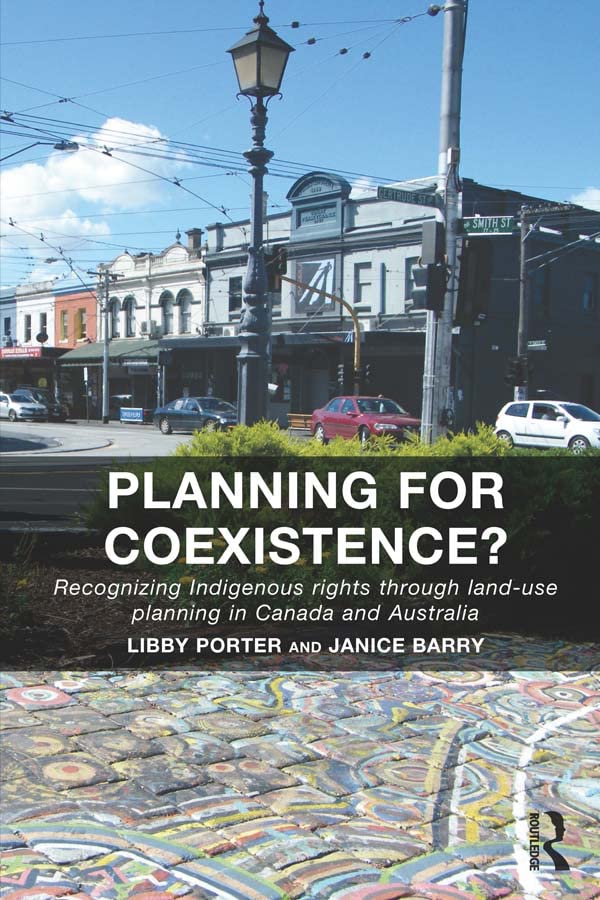
Planning for Coexistence?: Recognizing Indigenous rights through land-use planning in Canada and Australia
Produktdetails
| Artikelnummer | 233424154 | Erscheinungsdatum | 2026/06/27 | Listenpreis | €15.72 | Modellnummer | 233424154 | ||
|---|---|---|---|---|---|---|---|---|---|
| Kategorie | |||||||||
Planning is becoming one of the key battlegrounds for Indigenous people to negotiate meaningful articulation of their sovereign territorial and political rights, reigniting the essential tension that lies at the heart of Indigenous-settler relations. But what actually happens in the planning contact zone - when Indigenous demands for recognition of coexisting political authority over territory intersect with environmental and urban land-use planning systems in settler-colonial states? This book answers that question through a critical examination of planning contact zones in two settler-colonial states: Victoria, Australia and British Columbia, Canada. Comparing the experiences of four Indigenous communities who are challenging and renegotiating land-use planning in these places, the book breaks new ground in our understanding of contemporary Indigenous land justice politics. It is the first study to grapple with what it means for planning to engage with Indigenous peoples in major cities, and the first of its kind to compare the underlying conditions that produce very different outcomes in urban and non-urban planning contexts. In doing so, the book exposes the costs and limits of the liberal mode of recognition as it comes to be articulated through planning, challenging the received wisdom that participation and consultation can solve conflicts of sovereignty. This book lays the theoretical, methodological and practical groundwork for imagining what planning for coexistence might look like: a relational, decolonizing planning praxis where self-determining Indigenous peoples invite settler-colonial states to their planning table on their terms. Read more
Korrektur der Produktinformationen
Wenn Sie Unvollständigkeiten oder Fehler in den Produktinformationen auf dieser Seite bemerken, nutzen Sie bitte das Korrekturformular unten.
KorrekturanfrageKundenbewertungen
Für dieses Produkt liegen derzeit keine schriftlichen Bewertungen vor.