
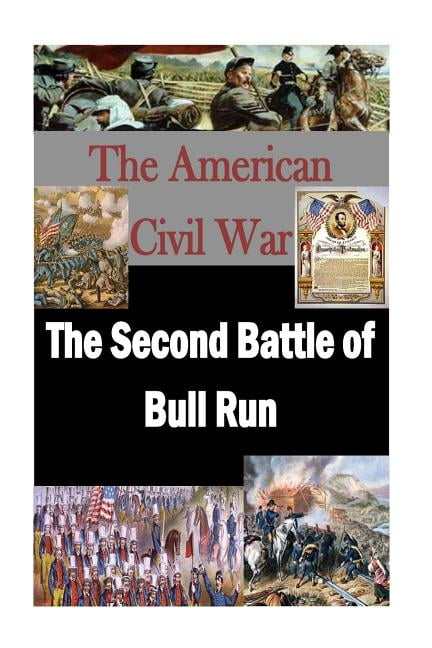
American Civil War: The Second Battle of Bull Run (Paperback)
Produktdetails
| Artikelnummer | 240774067 | Erscheinungsdatum | 2026/07/16 | Listenpreis | €3.98 | Modellnummer | 240774067 | ||
|---|---|---|---|---|---|---|---|---|---|
| Kategorie | |||||||||
After the Union defeat at Manassas in July 1861, Gen. George B. McClellan took command of the Federal forces in and around Washington and organized them into a formidable fighting machine- the Army of the Potomac. In March 1862, leaving a strong force to cover the capital, McClellan shifted his army by water to Fort Monroe on the tip of the York-James peninsular, only 100 miles southeast of Richmond. Early in April he advanced toward the Confederate capital.Anticipating such a move, the Southerners abandoned the Manassas area and marched to meet the Federals. By the end of May, McClellan's troops were within sight of Richmond. Here Gen. Joseph E. Johnston's Confederate army assailed the Federals in the bloody but inconclusive Battle of Seven Pines. Johnston was wounded, and President Davis placed Gen. Robert E. Lee in command. Seizing the offensive, Lee sent his force (now called the Army of Northern Virginia) across the Chickahominy River and, in a series of savage battles, pushed McClellan back from the edge of Richmond to a position on the James River.At the same time, the scattered Federal forces in northern Virginia were organized into the Army of Virginia under the command of Gen. John Pope, who arrived with a reputation freshly won in the war's western theater. Gambling that McClellan would cause no further trouble around Richmond, Lee sent Stonewall Jackson's corps northward to "suppress" Pope. Jackson clashed indecisively with part of Pope's troops at Cedar Mountain on August 9. Meanwhile, learning that the Army of the Potomac was withdrawing by water to join Pope, Lee marched with Gen. James Longstreet's corps to bolster Jackson. On the Rapidan, Pope successfully blocked Lee's attempts to gain the tactical advantage, and then withdrew his men north of the Rappahannock River. Lee knew that if he was to defeat Pope he would have to strike before McClellan's army arrived in northern Virginia. On August 25 Lee boldly started Jackson's corps on a march of over 50 miles, around the Union right flank to strike at Pope's rear.Two days later, Jackson's veterans seized Pope's supply depot at Manassas Junction. After a day of wild feasting, Jackson burned the Federal supplies and moved to a position in the woods at Groveton near the old Manassas battlefield.Pope, stung by the attack on his supply base, abandoned the line of the Rappahannock and headed towards Manassas to "bag" Jackson. At the same time, Lee was moving northward with Longstreet's corps to reunite his army. On the afternoon of August 28, to prevent the Federal commander's efforts to concentrate at Centreville and bring Pope to battle, Jackson ordered his troops to attack a Union column as it marched past on the Warrenton Turnpike. This savage fight at Brawner's Farm lasted until dark.Convinced that Jackson was isolated, Pope ordered his columns to converge on Groveton. He was sure that he could destroy Jackson before Lee and Longstreet could intervene. On the 29th Pope's army found Jackson's men posted along an unfinished railroad grade, north of the turnpike. All afternoon, in a series of uncoordinated attacks, Pope hurled his men against the Confederate position. In several places the northerners momentarily breached Jackson's line, but each time were forced back. During the afternoon, Longstreet's troops arrived on the battlefield and, unknown to Pope, deployed on Jackson's right, overlapping the exposed Union left. Lee urged Longstreet to attack, but "Old Pete" demurred. The time was just not right, he said.The morning of August 30 passed quietly. Just before noon, erroneously concluding the Confederates were retreating, Pope ordered his army forward in "pursuit". The pursuit, however, was short-lived. Pope found that Lee had gone nowhere. Amazingly, Pope ordered yet another attack against Jackson's line.
American Civil War: The Second Battle of Bull Run (Paperback)| Book format | Paperback |
|---|---|
| Fiction/nonfiction | Non-Fiction |
| Genre | History |
| Publication date | November, 2014 |
| Pages | 28 |
| Series title | American Civil War |
| Publisher | Createspace Independent Publishing Platform |
| Original languages | English |
| Language | English |
| Editor | Walter H T Seager |
| Binding type | Paperback / softback |
| Assembled product dimensions (l x w x h) | 9.02 x 5.98 x 0.06 Inches |
| Assembled product weight | 0.11 lbs |
| Bisac subject heading | History |
Bestseller-Ranking
Mezco Toys

Korrektur der Produktinformationen
Wenn Sie Unvollständigkeiten oder Fehler in den Produktinformationen auf dieser Seite bemerken, nutzen Sie bitte das Korrekturformular unten.
KorrekturanfrageKundenbewertungen
Für dieses Produkt liegen derzeit keine schriftlichen Bewertungen vor.